Control loop
Image → recognize → decide → execute → confirm. The device transports/holds paper; Mobile-ID recognizes and decides; Trusted Records reconciles. Early images, deadlines, ACKs and buffers are requirements pending vendor validation.

Digitize · Manage · Discover · Preserve · Trust
Trusted Records connects paper and digital records through custody, quality controls and processing evidence — for government, financial institutions and enterprises.
From intake to governed records. Agree delivery scope and deployment criteria per project.
Image → recognize → decide → execute → confirm. The device transports/holds paper; Mobile-ID recognizes and decides; Trusted Records reconciles. Early images, deadlines, ACKs and buffers are requirements pending vendor validation.
QC → acceptance → registration → access → discovery → preservation → delivery/disposition. Born-digital records use package validation and bypass Flow R. Uncertain AI results require configured holding/buffering/stopping rather than assuming a reviewer can respond during an unverified transport window.
Sheet ↔ image ↔ dossier ↔ decision ↔ location ↔ reconciliation. Capture order is not authoritative order; reconstruction requires mappings and evidence.
Package/manifest → validation/quarantine → reviewed declaration. Preserve source hashes, metadata and versions; bypass Flow R.
Authority → access → retention/holds → profile/preservation → handover. Decisions and evidence remain record-specific.
The manufacturer describes Flow R as a scanning, holding, return, filing and packaging system. Published capabilities do not establish acceptance of Mobile-ID sheet-level control requirements.
Manufacturer source ↗Confirm specifications, firmware, supported paper, timing and maintenance in the technical agreement; vendor pricing or benchmarks are not service prices or SLAs.
Read the device contract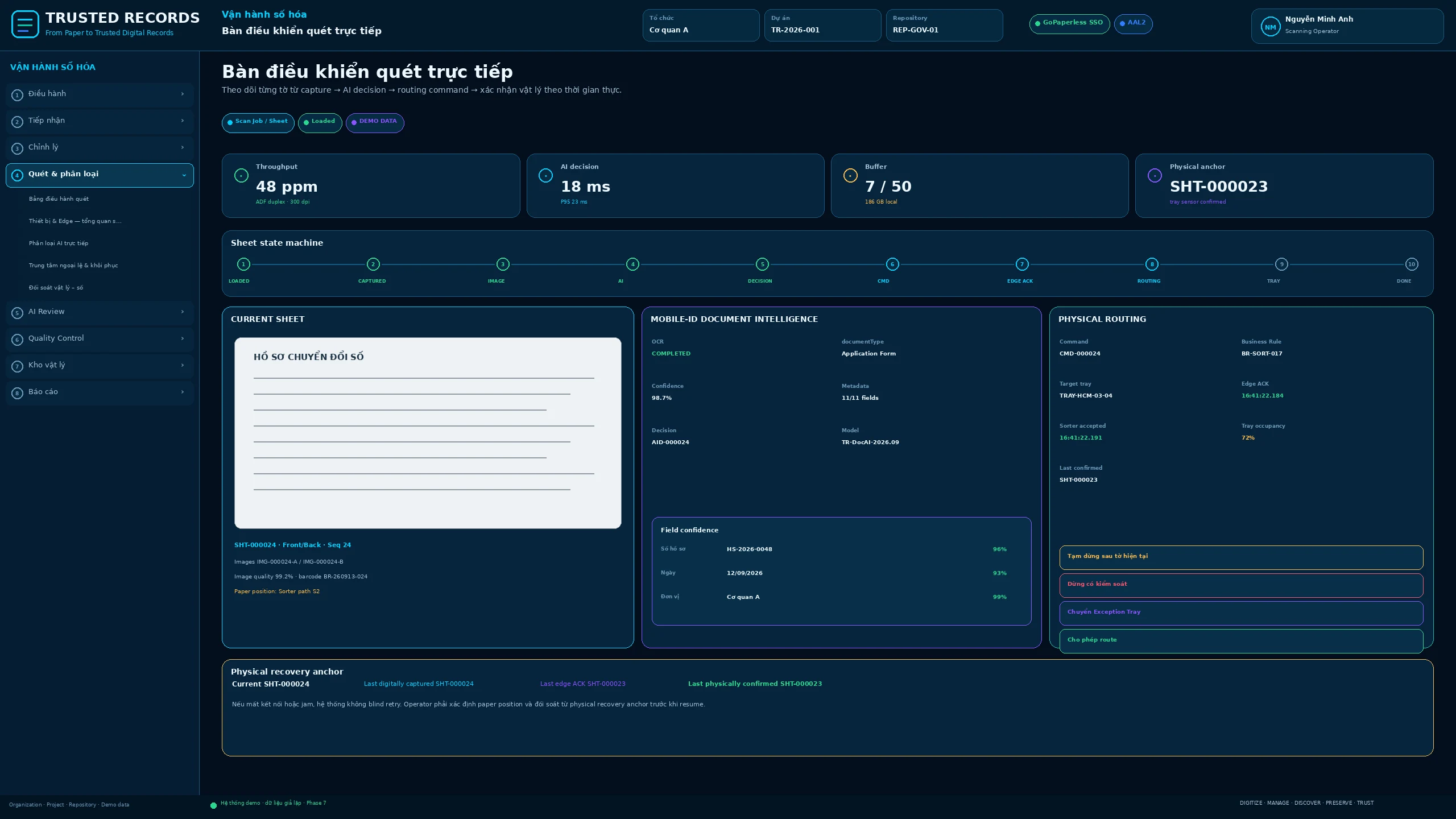
Coordinate paper records from intake to handover: preserve order, assess quality and resolve discrepancies at each station.
Explore portal experience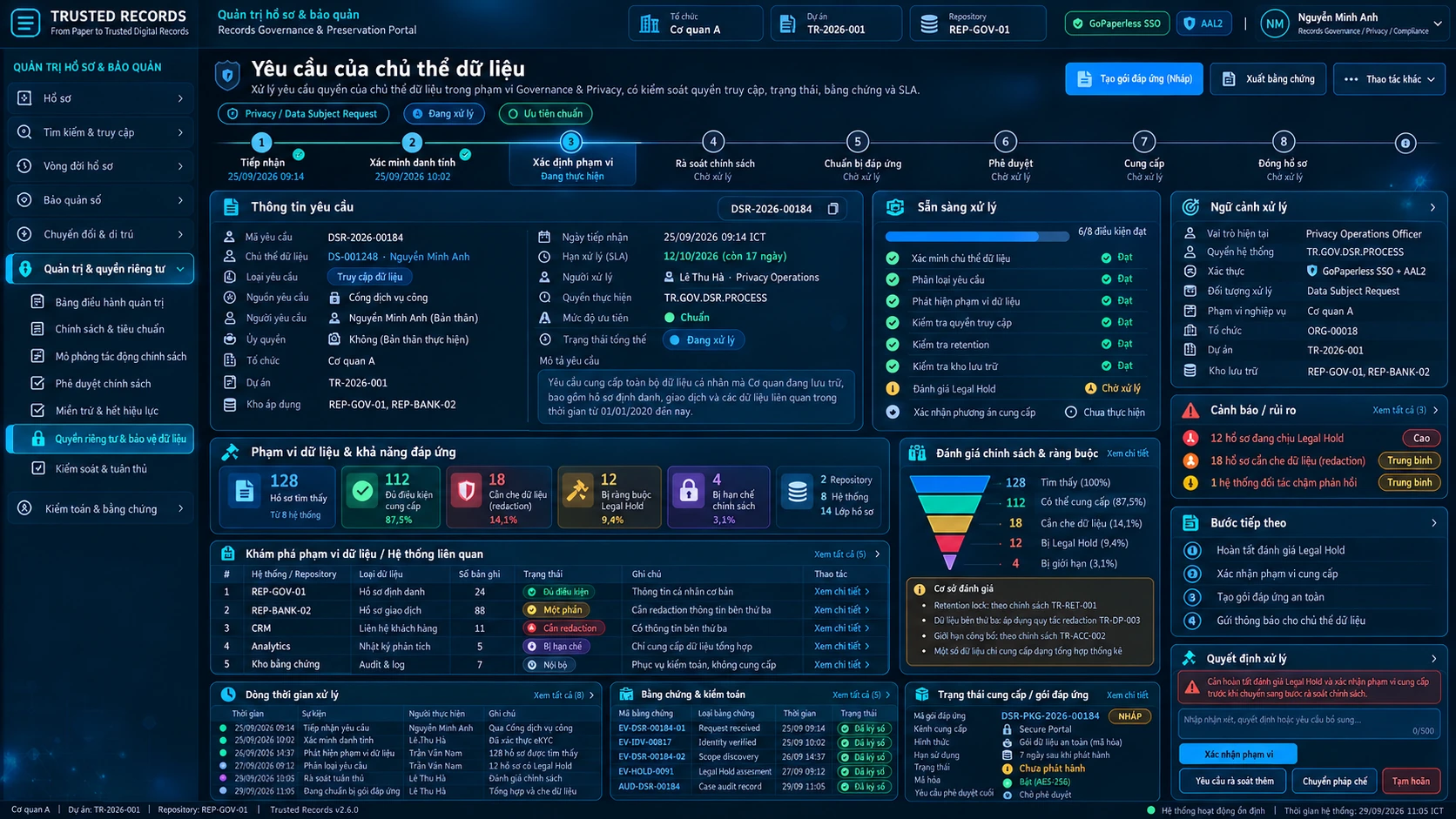
Register, access and preserve records under policy: identify authoritative representations, authorized users and permitted lifecycle disposition.
Explore portal experience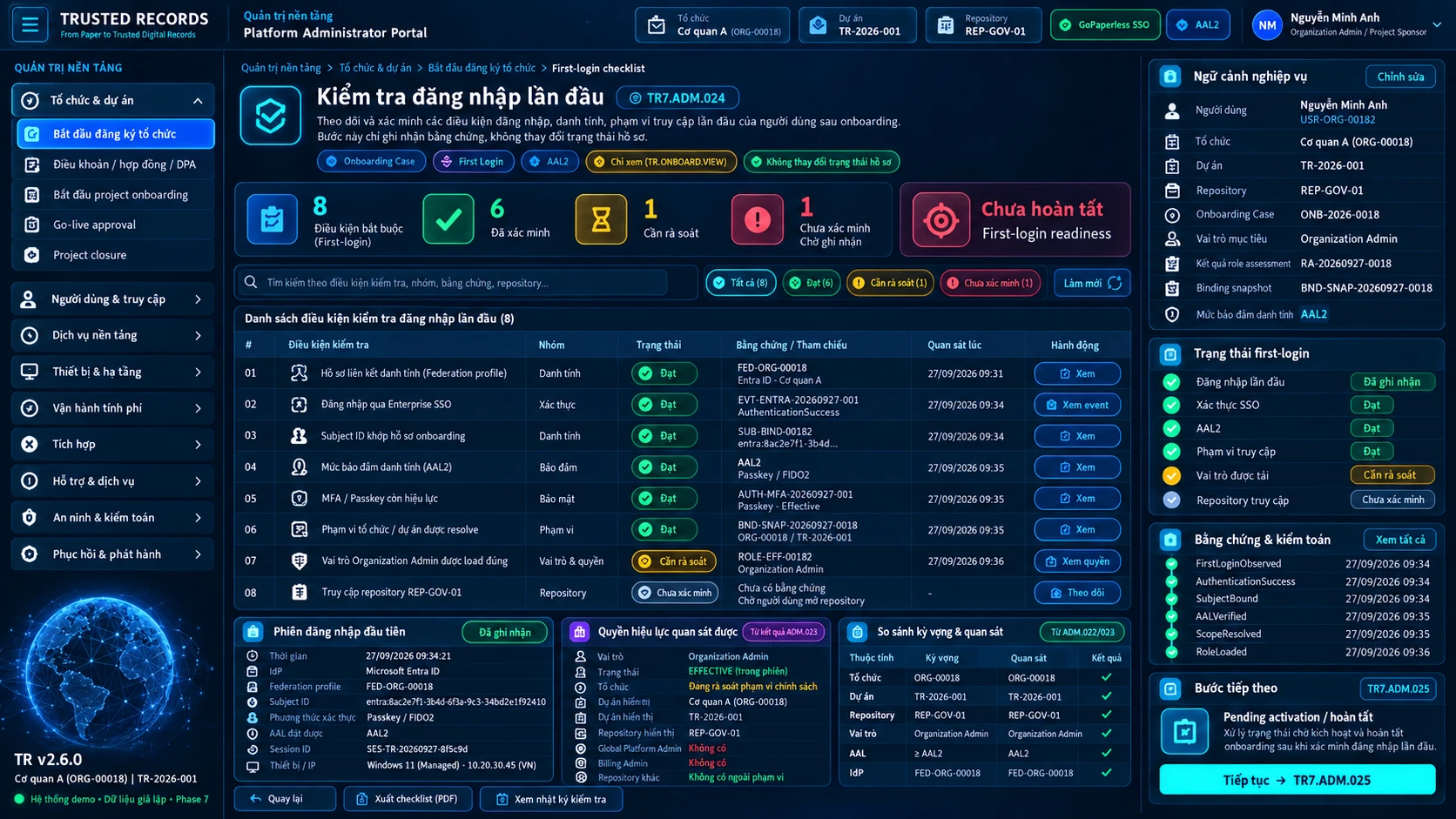
Govern organizations, permissions, configurations and integrations while preserving project responsibility boundaries and privileged-action controls.
Explore portal experience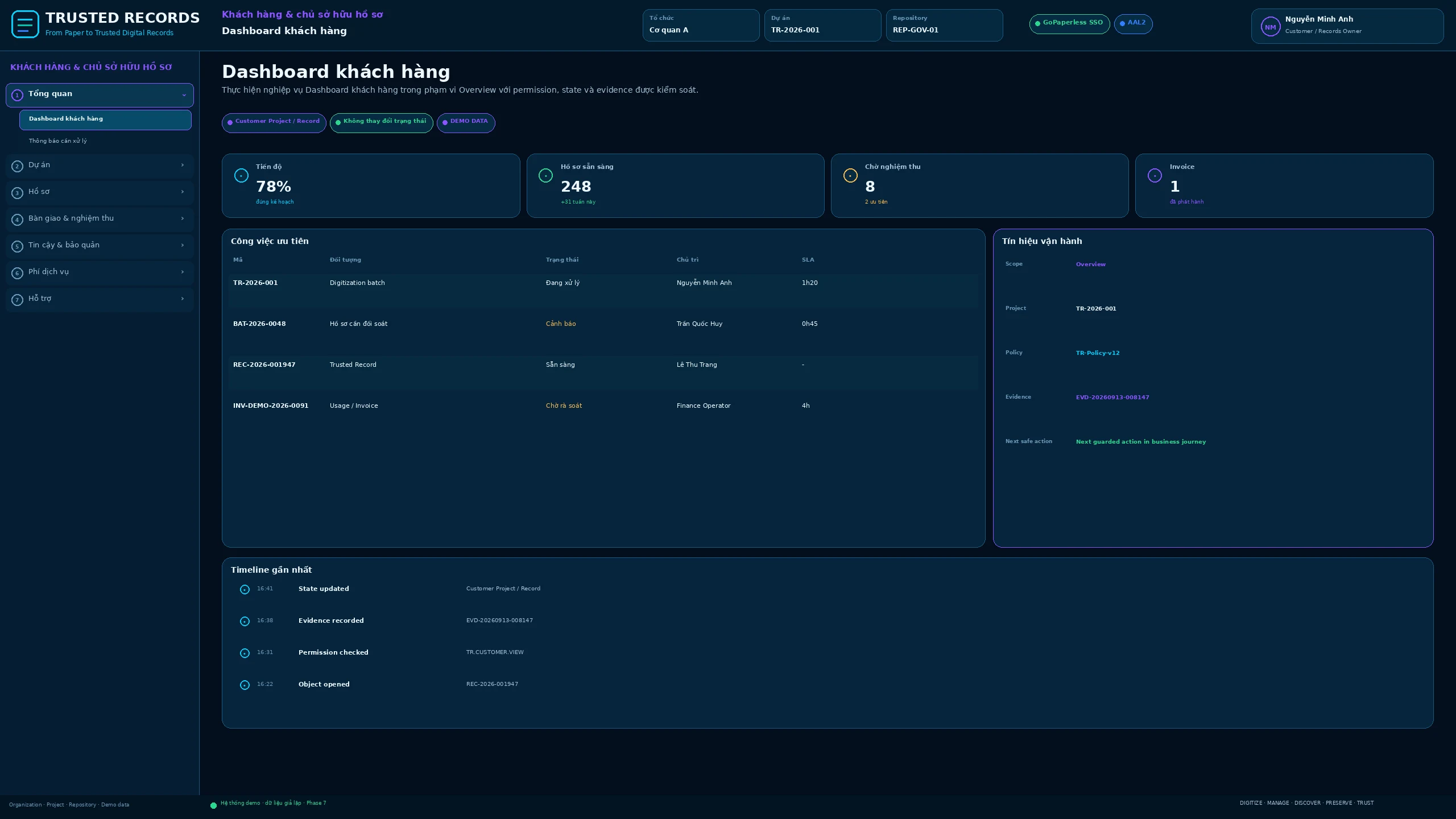
Track service delivery, inspect results, request corrections and accept portions; receive records with metadata and handover evidence.
Explore portal experienceADM/GOV use inspected final sources where available; DIG/CUS retain references because finals were not received.
Explore interfaces by taskRecord/version, authority, retention and holds
Source bytes, replicas, locations and operator permissions
Formats, representation information, migration/lineage
Contract-specific validation, profiles, receipts, renewal and verification
Restore operations without replacing preservation layers
Connect records lineage to Mobile-ID’s published LTANS capability; agree the Records configuration in a contract and profile.
Read detailsChoose preservation configurations by record class, designated community and required evidence. Illustrative profiles are not approved service offerings.
Read detailsStandards → controls → workflows → contracts → evidence. Reference design mappings rather than Trusted Records certification.
Read detailsExercise a records workflow with forms, requests/responses and a timeline. Use synthetic data in offline simulation or a local HTTP mock.
Read detailsShared identity for four portals; business authority remains organization- and project-scoped.
Read detailsExternal identity route for authorized journeys; bind the result to subject, application and session.
Read detailsPermitted information sharing for a stated purpose; it does not confer unrestricted citizen-data access.
Read detailsRAR connectivity requires an official contract before establishing Trusted Records functions.
Read detailsAcceptance → billable usage → payment request → confirmation → reconciliation → invoice. NAPAS QR/Trusted Billing are contractual; the offline package contains no payable QR.
Reconcile accepted quantities with contractual rules before billing instead of charging all processing attempts.
Read detailsIntegration design separates payment confirmation, reconciliation and invoice issuance.
Read detailsExercise a records workflow with forms, requests/responses and a timeline. Use synthetic data in offline simulation or a local HTTP mock.
Read detailsEach evidence type answers a different question; hashes, timestamps and approvals are not interchangeable.
Read detailsCheck synthetic-package hashes before delivery; distinguish byte integrity from authenticity, signatures and legal status.
Read detailsPublish certificates only for their documented subjects, scopes and validity.
Read detailsPolicy content for project discussion; it is not confirmed as issued policy.
Read detailsSector solutions bind access, retention, integration and verifiable pilot criteria.
Read detailsUse representative records to verify process, quality and integration before scaling.
Read detailsBind implementation milestones to deliverables, approvers and inspected evidence.
Read detailsAgree record classes, quality criteria, permissions and evidence before scaling.
Plan assessment