
Flow R control and timing boundaries
The requirements diagram separates receipt, execution and observed paper position; it is not an accepted firmware contract.
Responsibility and state diagram
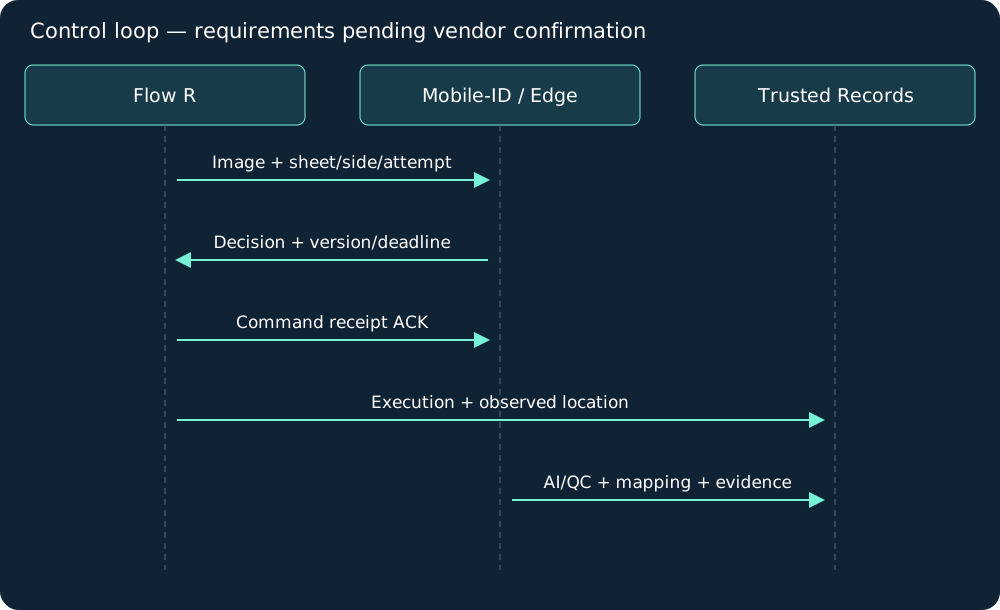
Three parties, four states
Flow R emits images/states; adapters retain sheet/side/attempt mappings; Mobile-ID issues versioned, deadline-bound decisions. Devices first acknowledge receipt, then report execution; observed locations support reconciliation. Measure latency from image availability to decision receipt rather than OCR duration alone.
Decision windows and exceptions
The vendor must confirm controllable-paper deadlines, buffer limits, ordering and safe-stop. Late/uncertain decisions must not be sent past the deadline; retain an observable position or stop under the profile. Human review works on exceptions after paper is safe.
Continue the workflow
Two journeys, one records lifecycle
Connect paper and born-digital records through persistent identifiers, policies and evidence.
Read detailsIntegration quickstart
Exercise ingest → job tracking → registration → verification with synthetic data.
Read detailsIntegrity, provenance and evidence
Each evidence type answers a different question; hashes, timestamps and approvals are not interchangeable.
Read detailsStart with a verifiable scope.
Agree record classes, quality criteria, permissions and evidence before scaling.
Plan assessment