
Records with a lifecycle. Data with provenance.
Digitize, govern, discover and preserve records end to end, connecting paper, digital representations and processing evidence.
Explore by workflow
Two journeys, one records lifecycle
Connect paper and born-digital records through persistent identifiers, policies and evidence.
Read detailsArchitecture and responsibility boundaries
Eight reference layers connect experience, devices, business services and evidence repositories. Verify deployment configurations per project.
Read detailsIntake and handover
Bring every records box into a controlled process: establish sender, receiver, condition and the portion accepted.
Read detailsPreparation and arrangement
Preserve original dossier structure before scanning instead of treating every stack as a single document.
Read detailsScanning and reconciliation
Bind each sheet to its scan images, processing attempt and routing result so recovery preserves the physical–digital link.
Read detailsAI/OCR and human review
Turn images into searchable data, with human decisions when confidence or business rules are insufficient.
Read detailsQC and output quality
Verify completeness, image quality and metadata before acceptance.
Read detailsDigitization control tower
Coordinate queues, stations and staff against actual capacity; expose whether work is waiting for paper, devices, AI or QC.
Read detailsPhysical records archive
Digitization does not end responsibility for paper. Manage location, custodian and every transfer by BoxID/DossierID.
Read detailsBorn-digital ingest
Ingest digital documents while retaining context, format and provenance, with validation before official record registration.
Read detailsOfficial records management
Establish when documents become registered/declared governed records and preserve subsequent change history.
Read detailsAuthorized search and access
Find the right record and provide only authorized representations, fields and access periods.
Read detailsLong-term digital preservation
Maintain readability, integrity verification and record context over time; backup is only part of recovery.
Read detailsConversion and migration
Change formats or repositories while preserving source–target reconciliation, version lineage and exceptions.
Read detailsOrganization and user onboarding
Establish organizations, tenants and user permissions against verified legal records and agreed data scope.
Read detailsProjects and readiness
Translate contractual scope into verifiable operational configuration before go-live.
Read detailsOrganization and platform administration
Manage permissions, tenant lifecycle and platform resources with clear privilege boundaries.
Read detailsIdentity, accounts and sessions
Place customers in the correct organization/project and recheck identity before high-risk actions.
Read detailsOwner progress and access
Owners inspect progress, quality and provenance before accepting outputs.
Read detailsDelivery, acceptance and closure
Accept against manifests/evidence; disputed items remain separate from accepted quantities.
Read detailsUsage, invoices and payment
Let owners reconcile charges with accepted quantities and agreed billing rules.
Read detailsControlled customer support
Customers track requests and authorize the scope/duration of support access.
Read detailsFour portals, clear roles
Separate execution, oversight and approvals across the same records lifecycle.
Read detailsBusiness experience
Follow tasks, states and exceptions from intake through acceptance.
Read details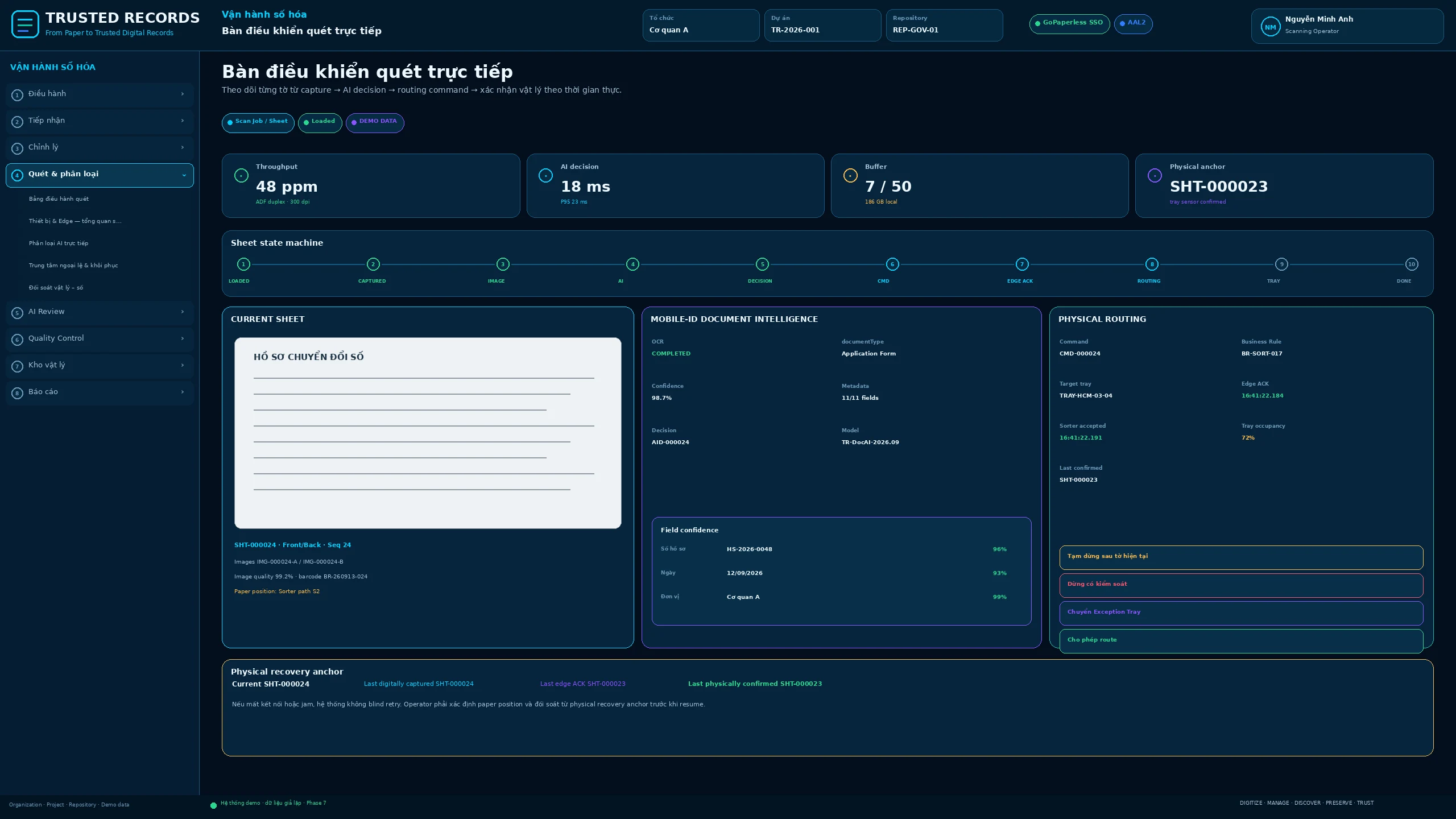
Digitization Operations Portal
Coordinate paper records from intake to handover: preserve order, assess quality and resolve discrepancies at each station.
Explore portal experience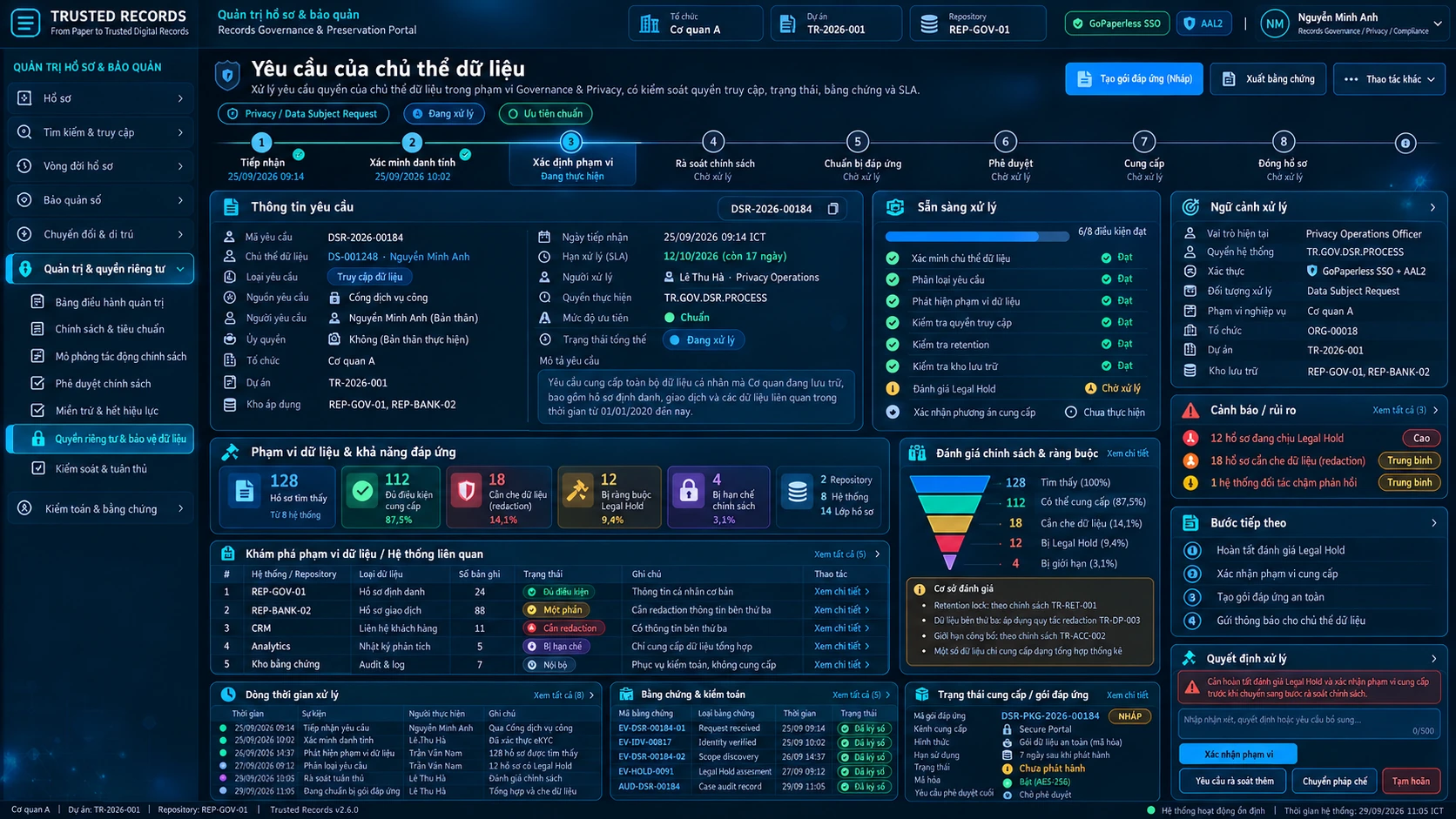
Records Governance & Preservation Portal
Register, access and preserve records under policy: identify authoritative representations, authorized users and permitted lifecycle disposition.
Explore portal experience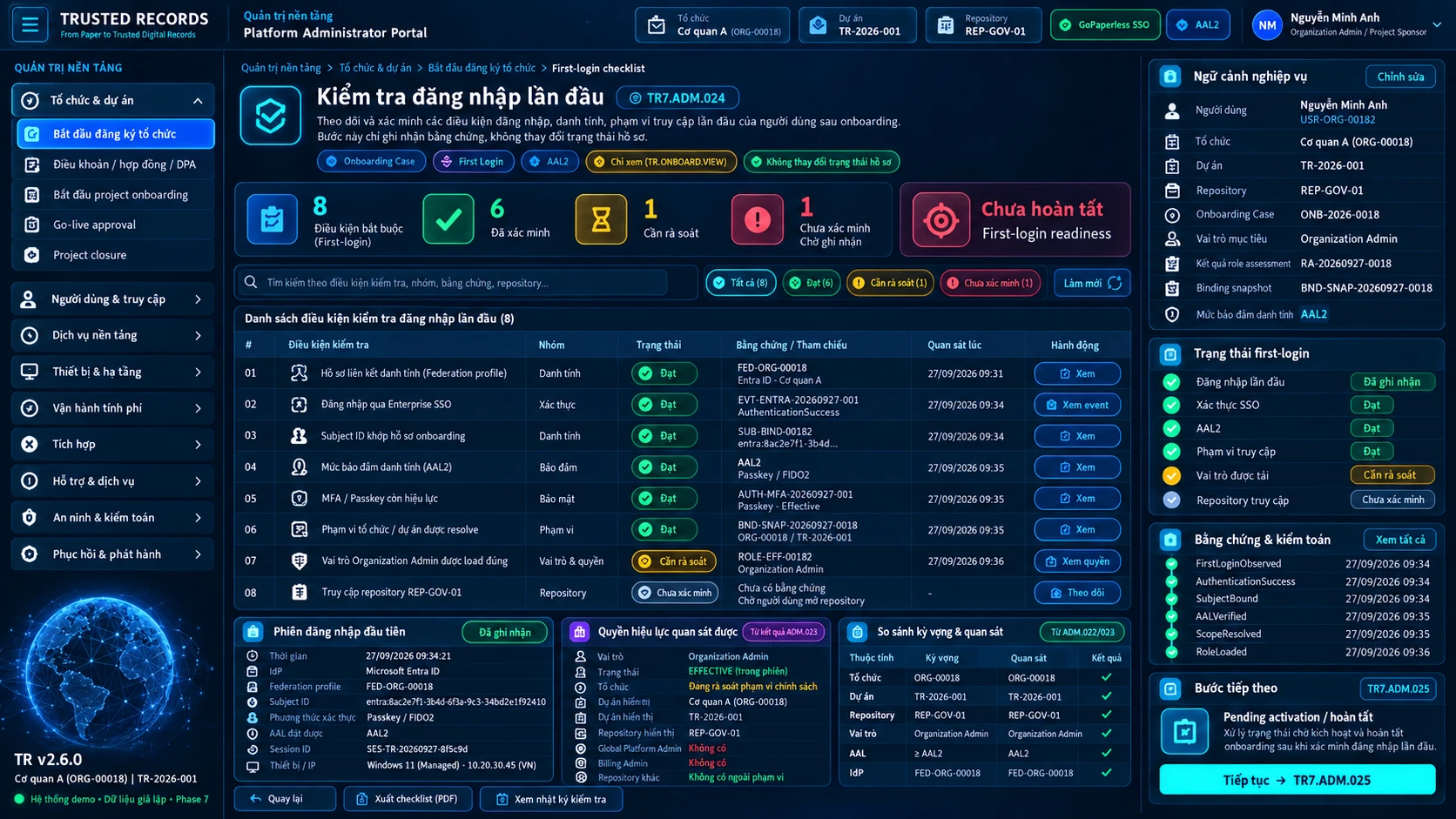
Platform Administrator Portal
Govern organizations, permissions, configurations and integrations while preserving project responsibility boundaries and privileged-action controls.
Explore portal experience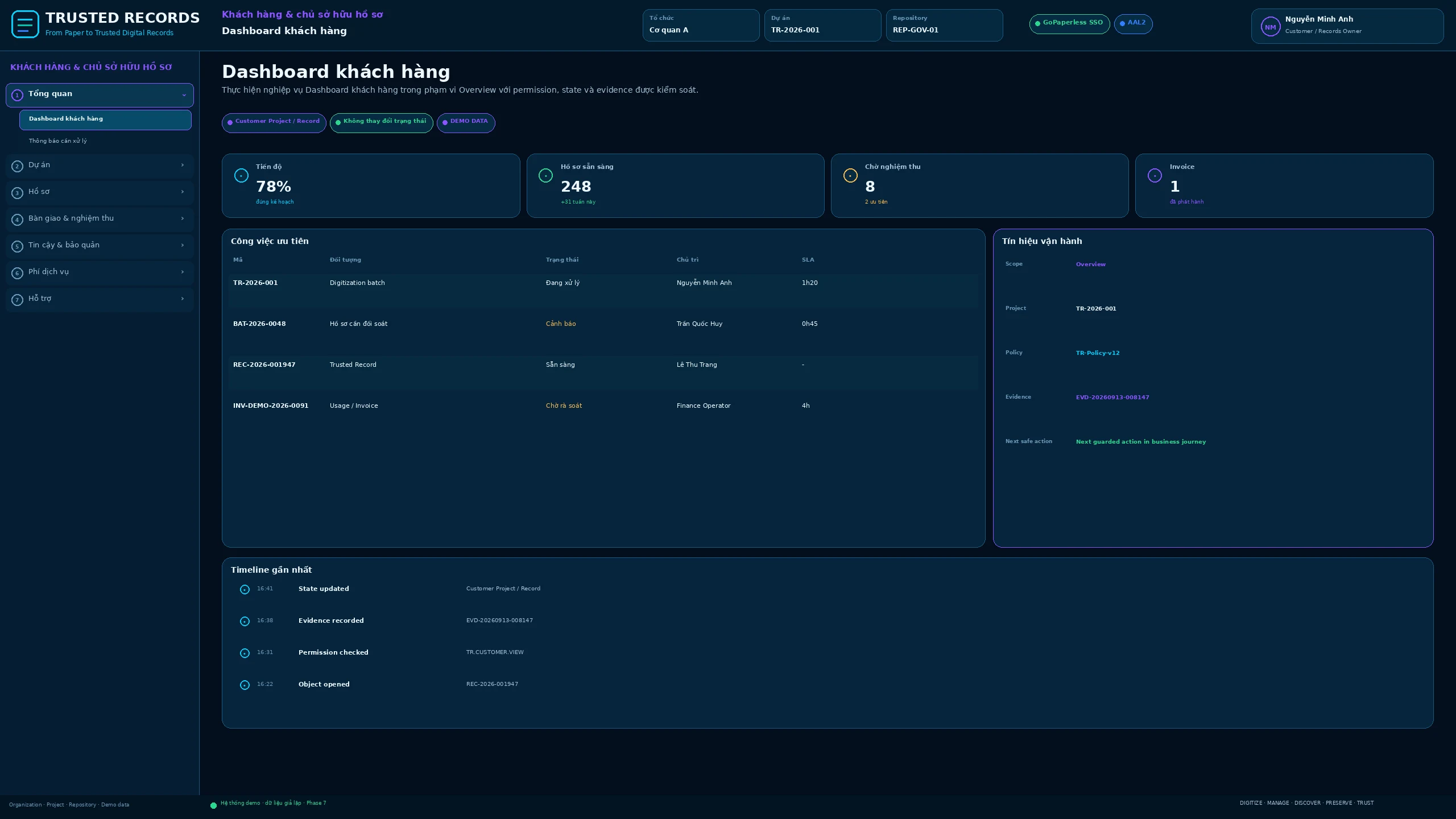
Customer Records Owner Portal
Track service delivery, inspect results, request corrections and accept portions; receive records with metadata and handover evidence.
Explore portal experienceRecords modernization service
From material assessment to governed and preserved records: agree outputs, responsibilities and criteria before each delivery.
Read detailsRecords and data flow
BoxID/DossierID retain physical provenance; ImageID identifies images; RecordID identifies governed records. Manifests link content/metadata; indexes support discovery under the same access policy.
Read detailsIdentity and access
The IdP authenticates subjects; Trusted Records authorizes organization/project, role, purpose and action. Configuration, processing and acceptance authority must follow separate responsibilities; revocation must affect active sessions/access.
Read detailsEvidence and preservation
Manifests identify contents; hashes test bytes; provenance establishes origin; QC assesses criteria; approvals record decisions; signatures/timestamps apply under agreed services. Preservation packages retain required components and version histories.
Read detailsDeployment and cross-cutting controls
Select on-premise, Mobile-ID operated or hybrid models within confirmed scope. Agree data boundaries, logs, keys, backups, DR and support access; measure NFRs through pilots rather than treating architecture as SLA evidence.
Read detailsAccess the four portals
GoPaperless SSO is the shared authentication entry in the architecture; each portal authorizes organization and project access.
Read detailsFlow R control and timing boundaries
The requirements diagram separates receipt, execution and observed paper position; it is not an accepted firmware contract.
Read detailsPayment and invoice boundaries
Records establishes eligible volume; providers confirm funds; Trusted Billing orchestrates invoices under contract.
Read detailsLTANS — long-term evidence preservation
Connect records lineage to Mobile-ID’s published LTANS capability; agree the Records configuration in a contract and profile.
Read detailsPreservation Profile Center
Choose preservation configurations by record class, designated community and required evidence. Illustrative profiles are not approved service offerings.
Read detailsStart with a verifiable scope.
Agree record classes, quality criteria, permissions and evidence before scaling.
Plan assessment